Best Hevy App Alternative: Bazu for Focused Strength Training
Looking for a Hevy app alternative? Bazu gives iPhone and Android lifters a quieter workout log with free full-history charts, permanent PRs, muscle drill-down, goals, smart rest, and no social feed.
Waleed S.·Jul 11, 2026·Updated Aug 26, 2026·16 min read
Hevy is a strong workout tracker. It has a large community, a clean logging flow, exercise videos, Apple Watch support, Android support, and one of the cheaper Pro plans in the category. If you want a social gym log where you can follow friends and browse public routines, Hevy is probably the first app you should try.
But not every lifter wants a social training app. Some people want the opposite: open the app, start the next routine, log the set, see whether they are getting stronger, and leave. That is where Bazu fits.
If you are searching for a Hevy app alternative because the social layer is not for you, because you want more long-term progress visibility in the free tier, or because you want a quieter iPhone, Android, and Apple Watch workflow, this guide compares Bazu and Hevy directly.
Pricing and feature details are based on the U.S. App Store listings for Bazu (also on Google Play) and Hevy. App Store pricing can vary by region and may change over time.
Quick Comparison: Bazu vs. Hevy
If you are scanning before downloading another app, here is the practical difference.
Feature
Bazu
Hevy
Core philosophy
Focused, private strength tracker
Social workout tracker and planner
Social feed
No
Yes
Free routines
4, including programs added from the Routine Library
4
Free custom exercises
10
7
Full graph history
Free
Pro unlocks unlimited graph history
1RM tracking
Free
Yes
Permanent PR history
Every exercise + workout history
PRs tracked
Muscle analytics
Free, with individual-muscle drill-down
Muscle-group graphs
Goals with deadlines
Free (up to 3)
No direct equivalent found
Warm-up sets
Tracked, excluded from PRs/volume/PO
Warmup set type
Supersets
Yes
Yes
Rest timer
Exercise-aware smart rest timer
Custom rest timers
Apple Watch
Phone-free workouts + Digital Crown + live BPM
Logging + heart-rate tracking
Progressive overload recommendations
Bazu Pro
Hevy Pro via Hevy Trainer
Exercise instruction
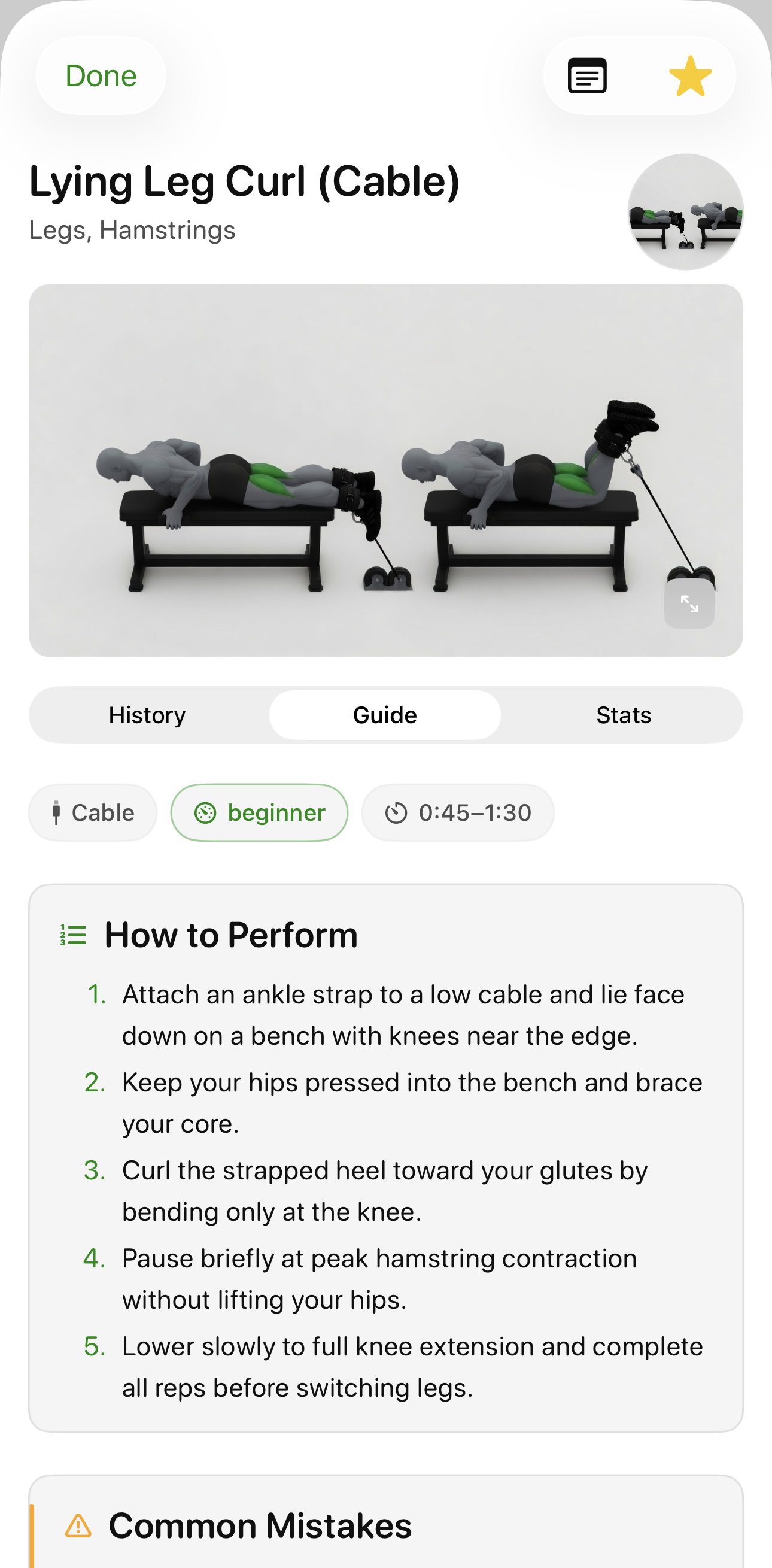
Anatomy illustrations + how-to guides
Exercise videos
Platform
iPhone + Android + Apple Watch
iPhone + Android + Apple Watch
Monthly price
$4.99
$2.99
Annual price
$24.99
$23.99
Lifetime option
Not offered
$74.99
Bottom line: Hevy is the better choice if you want community features, exercise videos, or the lowest-cost Pro tier. Bazu is the better Hevy alternative if you want a quieter workout log on iPhone or Android with free full-history progress charts, permanent PRs (personal records), 1RM (one-rep max), individual-muscle drill-down, goals with deadlines, smart rest, and no social feed.
Ready to Try Bazu?
Bazu is free to download on iPhone. The free tier includes full workout history, charts, 1RM, permanent PRs, muscle breakdown, goals, warm-up sets, supersets, Apple Watch logging, live BPM during rest, and a smart rest timer. Bazu Pro adds progressive overload recommendations, an intensity pace selector, Next Workout Targets, and unlimited routines, goals, and custom exercises.
When lifters look for a Hevy alternative, it is usually not because Hevy fails at workout logging. Hevy logs workouts well. The more common split is about training style.
Some lifters like posting workouts, following friends, comparing sessions, and using community routines. For those lifters, the social layer is a feature.
Other lifters want a private logbook. They do not want their gym app to feel like another feed. They want progress data, fast logging, rest guidance, and clear next steps without turning the workout into a social product. For that group, a more focused app can feel better over months of training.
The main reasons to consider switching from Hevy to Bazu are straightforward:
You want a workout tracker without followers, posts, comments, or a feed.
You want full-history charts and progress visibility available free.
You want muscle analytics that drill down beyond broad muscle groups.
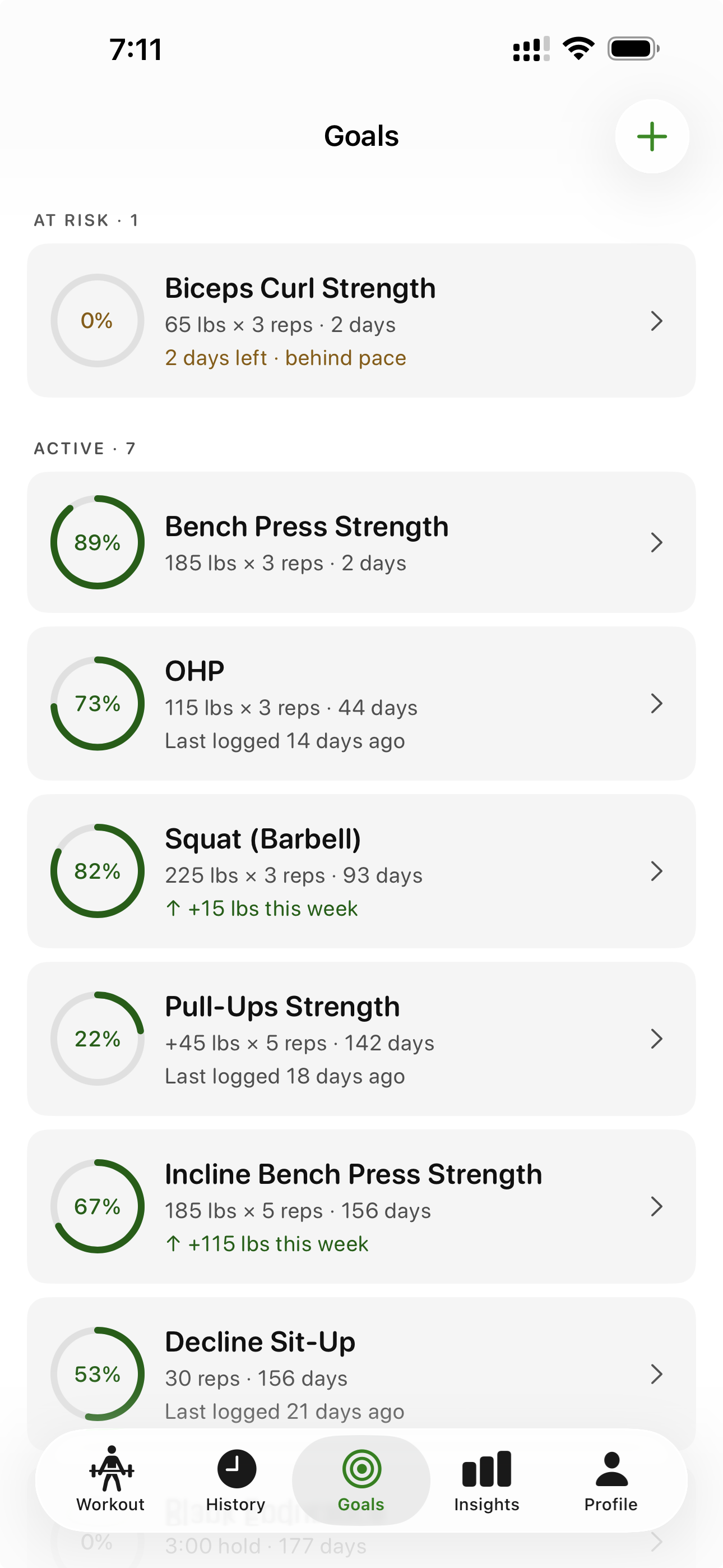
You want strength goals with target dates, not just a record of past workouts.
You want an exercise-aware rest timer instead of setting one default rest duration yourself.
You are on iPhone and want Apple Watch logging, live BPM during rest, and a synced rest timer in a more focused workflow.
Hevy's social layer is useful, but not universal
Hevy's community is a real advantage if social motivation works for you. Following training partners can help some lifters stay consistent. Copying routines from other users can also reduce setup time.
But that benefit is not universal. If you already have a program, train privately, or find social comparison distracting, the feed is not helping the job you opened the app to do. Bazu takes the opposite approach: no feed, no followers, no public workout posts. The app is built around the session in front of you and the progress data behind it.
Long-term progress visibility matters
Logging is only half the value of a strength training app. The other half is seeing whether the work is producing a trend.
Hevy's App Store listing says Hevy Pro unlocks unlimited graph history. Bazu's free tier is designed differently: full workout history, charts, 1RM tracking, volume trends, permanent PR history, and muscle breakdown are part of the free experience. That matters most after the first few months, when your old training data becomes more useful than your latest session.
Get one useful lifting idea at a time.
Short notes on progression, workout logging, and product improvements. No noisy fitness spam.
If you are doing hypertrophy (muscle growth) training, strength blocks, or a long cut/bulk cycle, the ability to see all-time exercise trends without upgrading is not a small detail. It is the difference between a logbook you can keep using free and one where the best analysis may eventually sit behind Pro.
Fixed rest timers ask you to manage more
Most workout trackers can start a rest timer. The harder question is whether the timer understands the exercise.
A heavy squat and a cable curl do not usually need the same rest period. Bazu Free includes a smart rest timer that uses exercise type and rest mode to suggest different recovery windows for compound exercises (squat, deadlift, bench) and isolation moves (curls, flies). It also auto-starts when you complete a set and lets you adjust mid-countdown.
Hevy supports custom automatic rest timers for each exercise, which is flexible. Bazu is better if you want the app to make the default rest decision for you.
How Bazu Answers Each Reason
Here is what changes if you switch from Hevy to Bazu.
A quieter workout app
Bazu is intentionally not a social app. There are no public profiles to manage, no community feed to check, no friend workouts to react to, and no comparison loop around your training.
That does not make Bazu better for everyone. It makes it better for a specific lifter: someone who wants the workout tracker to reduce friction, not add another surface to monitor. Open the app, start the next workout, log sets, review progress, close the app.
Bazu Free includes the progress data most lifters check when deciding whether training is working:
Full workout history
1RM estimates
Exercise-level charts
Volume analytics
Permanent PR history on every exercise
PRs earned inside completed workout history
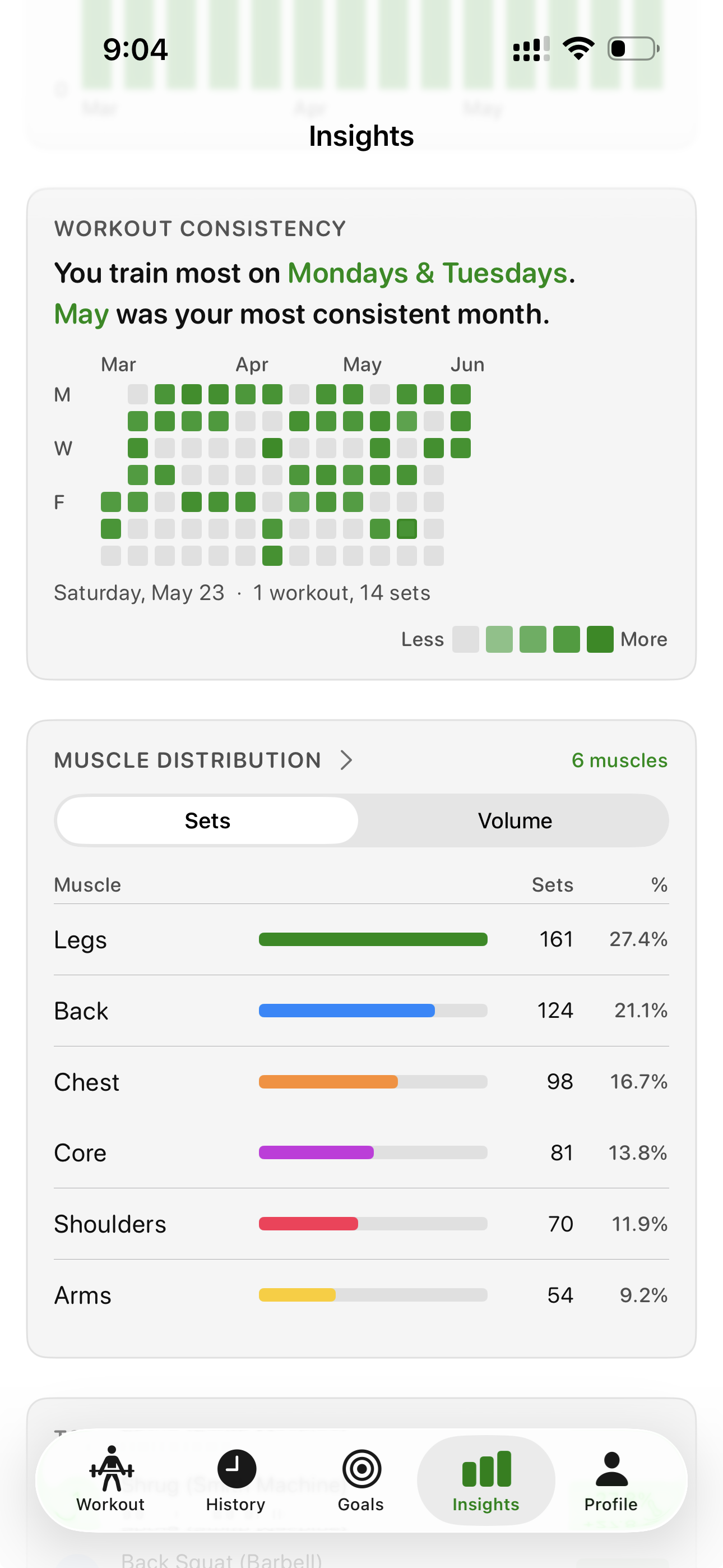
Muscle breakdown across Legs, Chest, Back, Shoulders, Arms, and Core
Drill-down from each muscle group into individual muscles
Hevy tracks progress too, and Hevy Pro removes the graph-history limit. The difference is where each app draws the free line. Bazu's free tier is built so long-term training data stays useful without requiring Pro.
A workout history tells you what happened. A goal tells you what you are trying to make happen next.
Bazu Free lets you create up to 3 goals with target dates. Those goals can cover strength targets, duration targets for timed exercises, and added-load targets for movements like weighted pull-ups and dips. Progress rings show whether you are moving toward the goal, and Bazu celebrates when you hit it.
That is different from only seeing a graph after the fact. It gives your training data a direction.
Smart rest between sets
Bazu Free includes an exercise-aware rest timer. It can use different rest recommendations for heavy compound work and smaller isolation work, auto-start after each completed set, run as a Live Activity on the lock screen, and sync with Apple Watch.
This is one of the clearest in-session differences between the apps. Hevy's timers are flexible and useful. Bazu's timer is designed to remove a decision. You can still adjust it, but you do not have to manually decide that a deadlift deserves more recovery than a lateral raise every time you build a routine.
Both Bazu and Hevy support Apple Watch workout logging. Hevy's App Store listing calls out live sync with iPhone, routine use on Watch, heart-rate tracking, timer support, set type marking, and workouts saving when reconnected.
Bazu's Watch workflow is focused on a phone-free set/rest loop. Choose a routine from your wrist, log weight and reps with the Digital Crown, see previous numbers and overload targets when available, view live BPM above the rest timer, feel haptics during rest, and finish fully on-device. The workout syncs automatically when Watch reconnects to iPhone.
Progressive overload when you want guidance
Both apps can support progressive overload manually: log sets, review previous weight and reps, and try to improve over time.
Automatic guidance is the paid layer in both apps. Bazu Pro suggests next sets, lets you choose an intensity pace, uses goal-aware rep ranges, and can show Next Workout Targets after a session. Hevy Pro includes Hevy Trainer, which Hevy describes as a guided trainer program with progressive overload.
So this is not "Bazu has guidance and Hevy does not." The better question is which workflow you want around that guidance. Bazu is a focused private logbook with progression layered into the workout. Hevy is a broader social tracker with Trainer as part of its Pro experience.
If you already like Hevy's social feed, exercise videos, and community routines, upgrading to Hevy Pro may be the cleanest move. Hevy Pro is cheaper than Bazu Pro in the U.S. App Store and offers a lifetime purchase. That is a real advantage.
Hevy Pro unlocks the limits that matter most inside Hevy: unlimited routines, unlimited graph history, unlimited custom exercises, and advanced measurements. It also includes Hevy Trainer.
Bazu Free gives iPhone lifters more long-term progress visibility before upgrading: full-history charts, 1RM, permanent PR history, muscle breakdown with drill-down, goals with deadlines, 4 routines, 10 custom exercises, warm-up sets, supersets, Apple Watch logging, and smart rest.
Bazu Pro is for guidance and scale: progressive overload recommendations, intensity pace, Next Workout Targets, unlimited routines, unlimited goals, unlimited custom exercises, and deeper insights.
So the decision is not only price. Hevy is cheaper if you know you want Pro. Bazu is stronger if your main frustration is paying before your long-term progress data feels complete, or if you want a less social workout app from the start.
4, including programs added from the Routine Library
4
Free custom exercises
10
7
Full graph history
Free
Pro unlocks unlimited graph history
1RM tracking
Free
Yes
Permanent PR history
Every exercise + workout history
PRs tracked
Muscle breakdown
Free, individual-muscle drill-down
Muscle-group graphs
Goals with deadlines
Free (up to 3; unlimited Pro)
No direct equivalent found
Warm-up sets
Tracked, excluded from PRs/volume/PO
Warmup set type
Supersets
Yes
Yes
Rest timer
Exercise-aware smart rest timer
Custom rest timers
Apple Watch
Phone-free workouts, Digital Crown, live BPM
Watch logging and heart-rate tracking
Progressive overload recommendations
Bazu Pro
Hevy Pro via Hevy Trainer
Social feed
No
Yes
Exercise videos
No, illustrated guides instead
Yes
Offline support
Offline logging with auto-sync
Watch workouts save when reconnecting to iPhone
Platform
iPhone + Android + Apple Watch
iPhone + Android + Apple Watch
Monthly price
$4.99
$2.99
Annual price
$24.99
$23.99
Lifetime option
Not offered
$74.99
Design philosophy
Minimal, private, progression-first
Social, cross-platform, community-first
If your must-haves are community sharing, instructional videos, or a lifetime purchase, Hevy may still be your app. If your priority is a private workout log with better free progress visibility and less noise during training, Bazu is the stronger fit.
Bazu workout logging — 1-tap sets, rest timer, and progressive overload in action
Who Bazu Is (and Isn't) For
Here is the plain version.
Choose Bazu if...
Choose Hevy if...
You want a private workout tracker without a social feed
You want to follow friends and post workouts
You want free full-history charts, 1RM, and permanent PRs
You are happy to upgrade for unlimited graph history
You want individual-muscle drill-down, not only broad muscle groups
You prefer Hevy's muscle-group graphs and exercise videos
You want goals with target dates
You mainly want logging, sharing, and community routine discovery
You want a smart rest timer that adjusts by exercise type
You prefer setting custom timers yourself
You want phone-free Apple Watch workouts
You want Hevy's social feed and community routines
Bazu is not trying to be a community platform. It is built for the serious-but-busy lifter who wants the app to stay quiet, keep accurate history, and make the next set easier to execute.
Hevy is not the wrong choice. It is a strong choice for social lifters, people who rely on exercise videos, and anyone who wants the lowest-cost Pro path with a lifetime option.
The Short Answer
For iPhone and Android lifters who want a quieter Hevy alternative, Bazu is the first app to try.
Hevy wins on community, exercise videos, and Pro pricing. Bazu wins for focused private training, free full-history progress charts, permanent PR history, individual-muscle drill-down, goals with deadlines, smart rest, and an Apple Watch flow built around logging the next set.
The practical decision is simple:
Pick Hevy if social motivation and cross-platform support matter.
Pick Bazu if focus, free progress visibility, and iPhone/Watch training flow matter more.
The best workout tracker is the one that helps you train consistently without pulling your attention away from the work. For many lifters, that means less feed and more feedback.
FAQ
What is a good alternative to the Hevy workout app?
Bazu is a good Hevy alternative for iPhone lifters who want a focused workout tracker without a social feed. Bazu Free includes full-history charts, 1RM, permanent PR history, muscle breakdown with drill-down, 4 routines, 10 custom exercises, warm-up sets, supersets, goals with deadlines, Apple Watch logging, live BPM during rest, and a smart rest timer. Bazu Pro adds progressive overload recommendations, intensity pace, Next Workout Targets, unlimited routines, unlimited goals, and unlimited custom exercises.
What is the main difference between Bazu and Hevy?
Hevy is built around social workout sharing, cross-platform support, exercise videos, and a lower-cost Pro tier. Bazu is built around private, focused lifting on iPhone and Apple Watch, with full-history progress charts, permanent PRs, individual-muscle drill-down, goals with deadlines, smart rest, and no social feed.
Is Bazu cheaper than Hevy?
No. Hevy Pro is cheaper in the U.S. App Store at $2.99/month, $23.99/year, or $74.99 lifetime. Bazu Pro is $4.99/month or $24.99/year and does not offer a lifetime plan. Bazu's advantage is not lowest price; it is what the free tier includes for long-term progress tracking and focused iPhone training.
Does Bazu have social features like Hevy?
No. Bazu intentionally does not include a social feed, followers, public workout posts, or community comparisons. If social motivation is important, Hevy may be the better fit. If you want a private gym log with fewer distractions, Bazu is designed for that.
Does Bazu work on Android?
Yes. Bazu is available on both iPhone and Android.
Which app is better for progressive overload?
Both apps support manual progressive overload tracking by logging weights, reps, and history. For automatic guidance, Bazu Pro gives next-set recommendations, intensity pace, goal-aware rep ranges, and Next Workout Targets. Hevy Pro includes Hevy Trainer, an adaptive coaching feature. The better choice depends on whether you want Bazu's focused logbook workflow or Hevy's broader social and cross-platform experience.
Is Bazu good for hypertrophy (muscle growth) training?
Yes. Bazu supports hypertrophy training with volume analytics, 1RM trends, muscle breakdown, individual-muscle drill-down, exercise-aware rest timing, warm-up sets, and permanent PR history. Bazu Pro adds goal-aware rep ranges and progressive overload recommendations.
See Bazu in Action
Clean, powerful, and free to use.
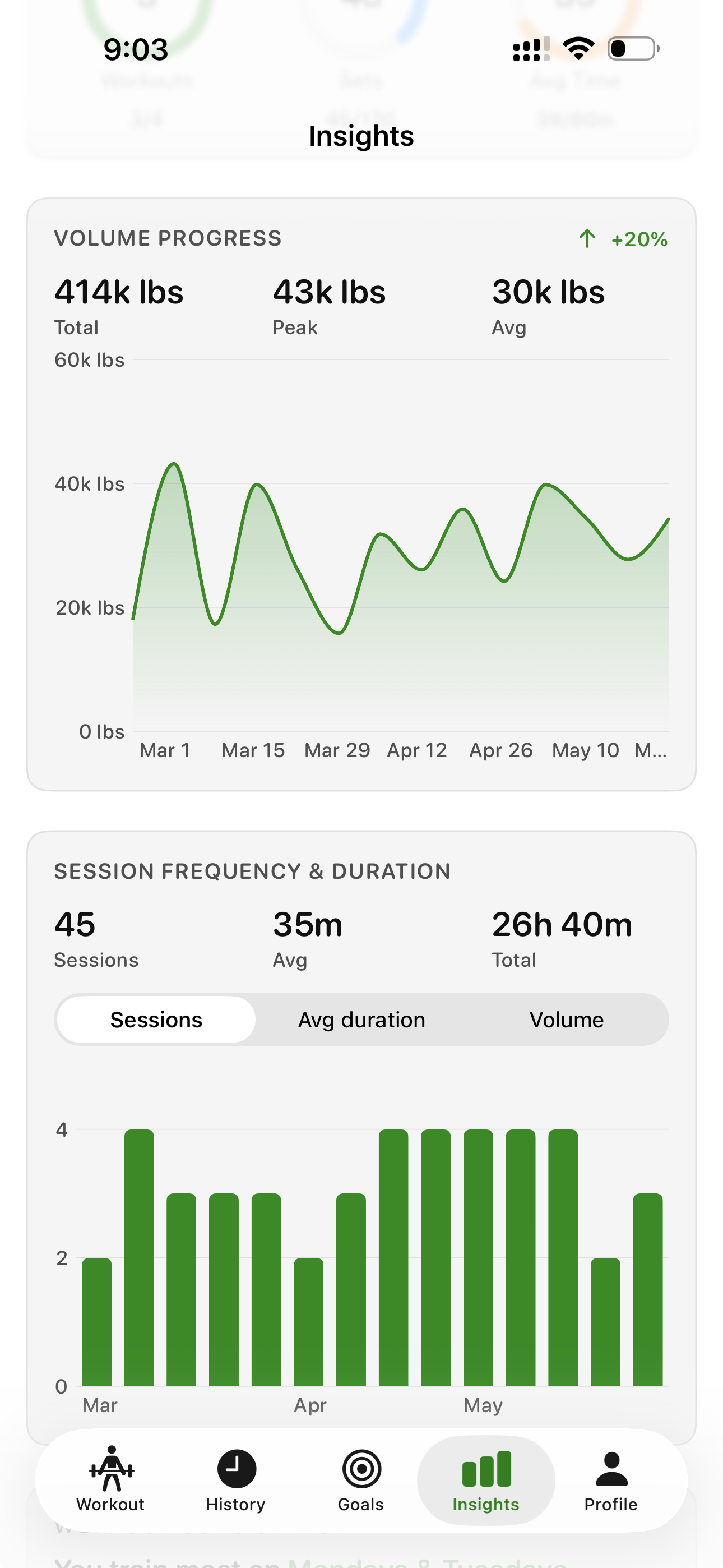
Volume analytics — track total reps and weight week to week
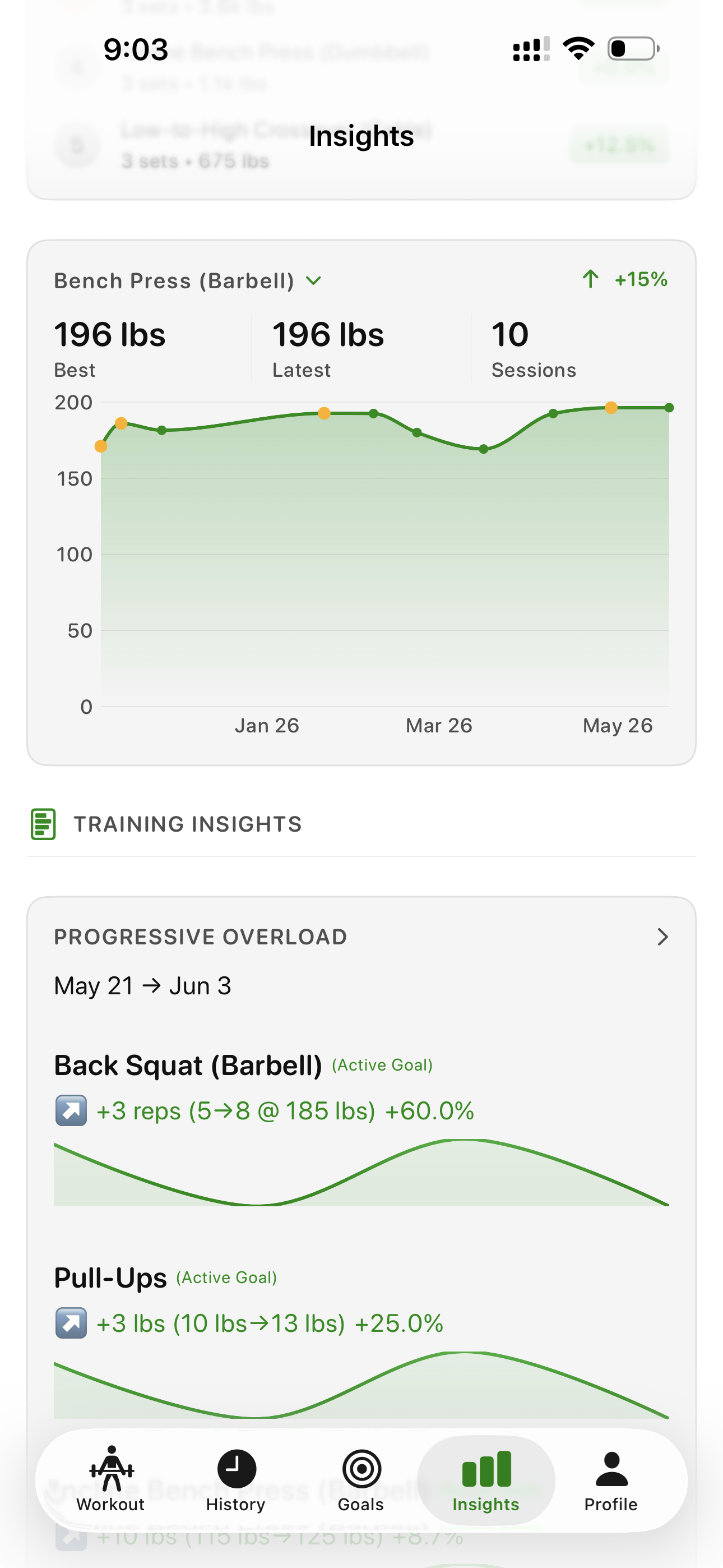
1RM chart — see your estimated max lift on a timeline
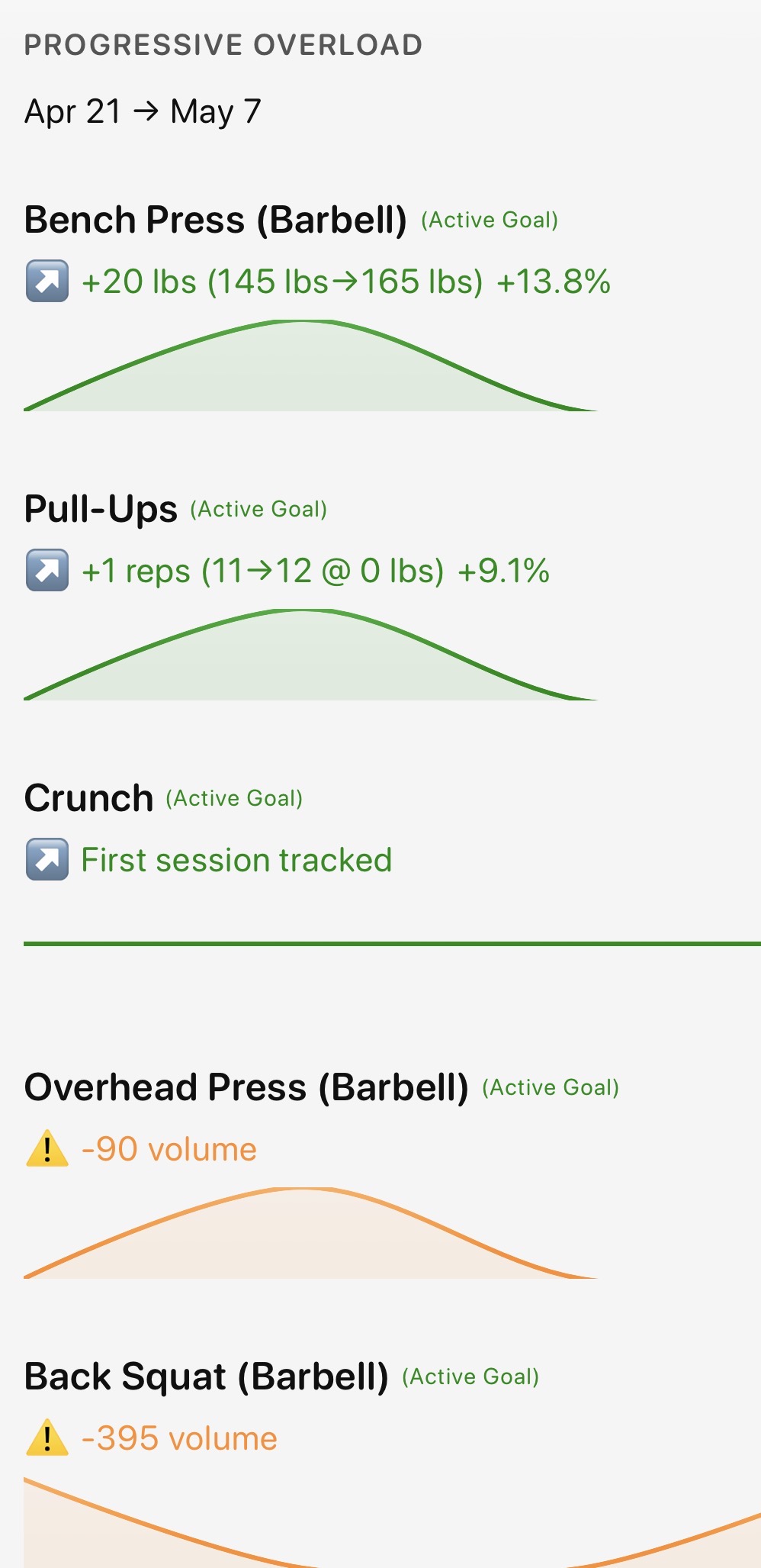
Progressive overload — suggestions for your next set with Bazu Pro
Consistency — see your training frequency and streaks at a glance
Goals — track deadlines and see if you're on track or at risk
Exercise guides — form tips and anatomy for every movement
Try Bazu Free on iPhone
If Hevy feels too social for the way you train, try Bazu before paying for another Pro plan. You get full-history charts, 1RM, permanent PRs, muscle breakdown, goals, warm-up sets, supersets, Apple Watch logging, live BPM during rest, and a smart rest timer free.
I'm the builder and user of Bazu. I've been lifting for over 10 years across strength and hypertrophy work, and I built Bazu to make progress simpler for serious lifters — every feature is designed around how real training actually works.
Put this guide into practice
Continue with a relevant calculator, exercise guide, or Bazu feature.